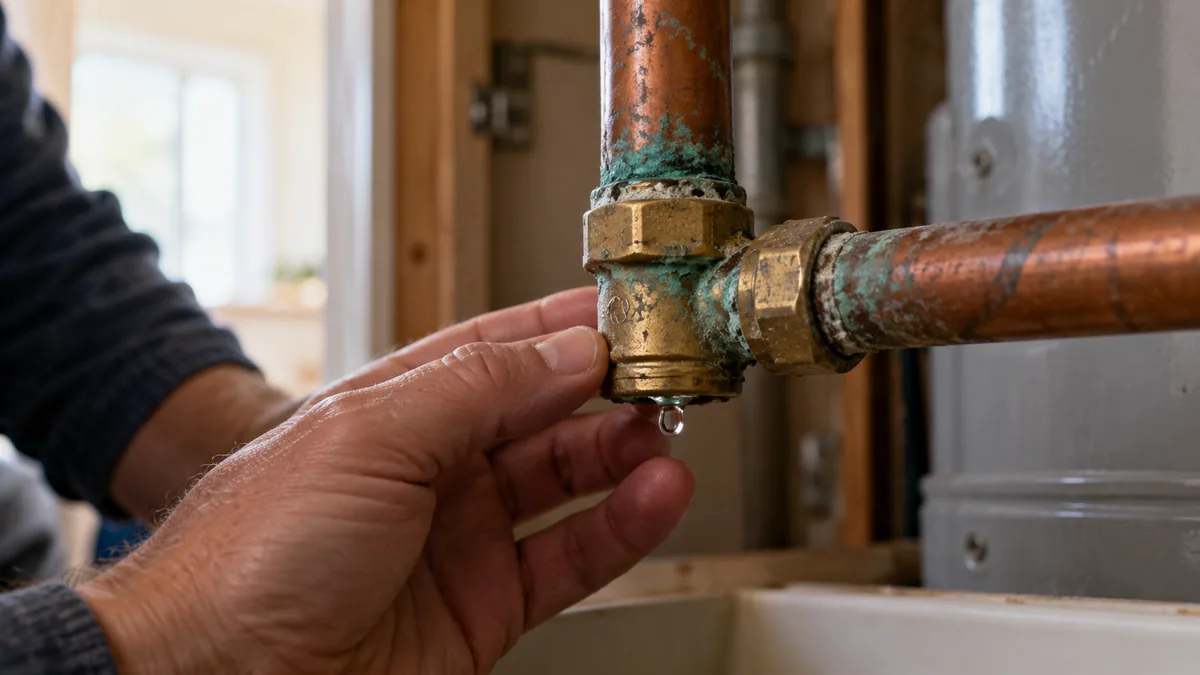
Worn or Stressed Connections
A joint needs the right parts and conditions
Fittings and flexible supply connections rely on compatible components and an appropriate installation. Wear, damaged seals, strain, or movement can allow water to escape. A line that is pulled tight or repeatedly knocked may develop a problem even when the surrounding pipe appears sound.
Do not start by tightening the wet joint. Overtightening can damage fittings, seals, or a fixture connection without addressing the cause. Note the location and whether the leak appears during fixture use or continues afterward. Those observations help a provider plan isolation and inspection.
Corrosion and Repeated Small Leaks
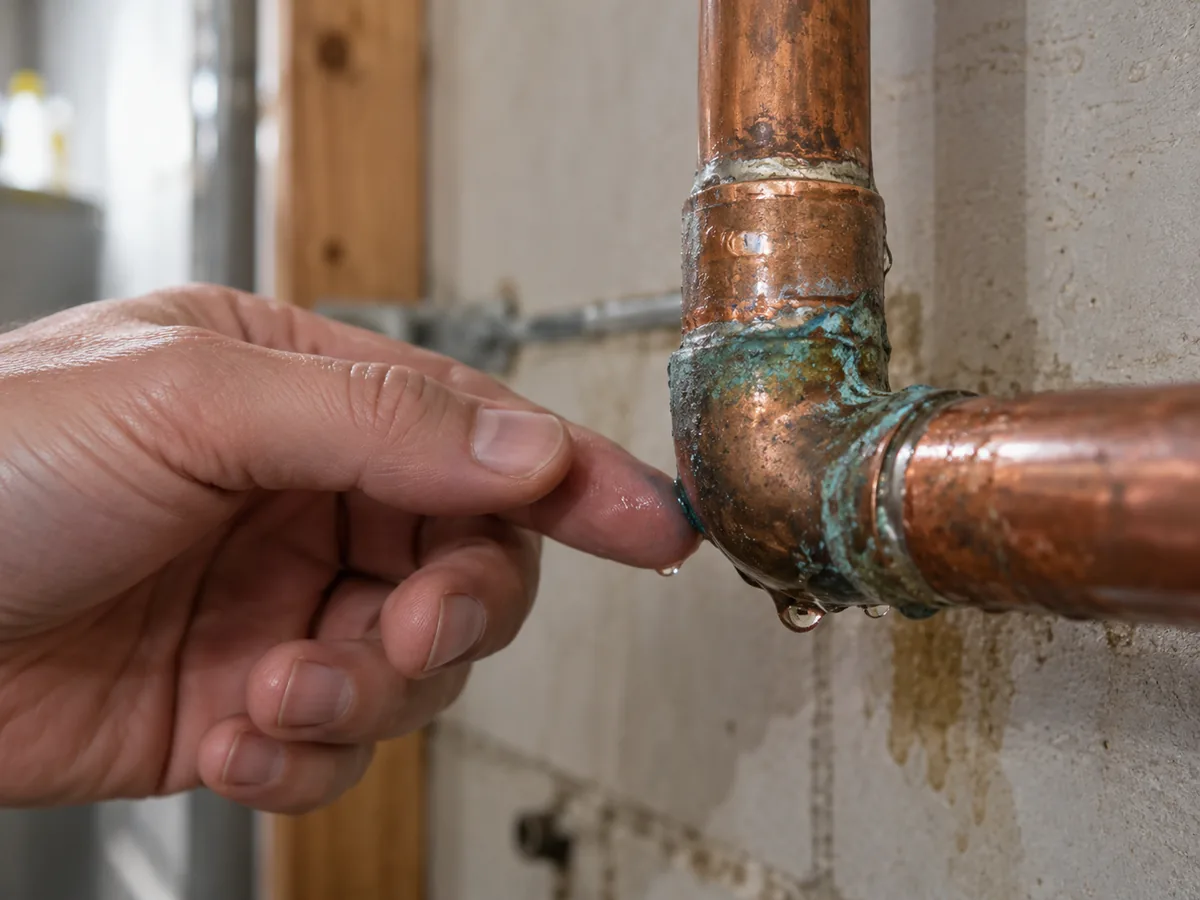
Deposits, staining, or discoloration on visible pipe can justify a closer assessment, particularly if fresh moisture is present. The appearance alone does not tell you the remaining wall thickness or whether an entire system needs replacement. Corrosion patterns depend on material, conditions, and installation history.
Report whether earlier repairs occurred nearby or in separate parts of the home. Multiple pinhole leaks over time can change the discussion from one fitting to broader pipe condition. Ask for the evidence supporting that recommendation instead of assuming every green mark requires repiping or that a tiny drip is harmless.
Movement, Impact, and Unsupported Lines
Plumbing can be affected by physical impact, vibration, temperature-related movement, or stress at a connection. Items stored against exposed lines and unsupported flexible connectors may contribute to strain. A provider can assess whether support or routing is part of the repair, not just replace the leaking piece.
Avoid moving a pipe to see whether the drip changes. A compromised joint can release more water when disturbed. Clear nearby stored items only if they can be moved without pulling on plumbing or entering a wet electrical area. Photograph the layout from a safe position before anything is altered.
Frozen Pipes Can Leak as They Thaw
Cold conditions can damage vulnerable lines, and a leak may become apparent only after water begins moving again. Reduced flow after a freeze deserves attention, especially near exposed or poorly protected areas. It does not prove that every affected line has burst, but normal use should not resume without watching for leakage.
Never use an open flame or torch to thaw a pipe. Seek professional help for inaccessible, leaking, or hazardous locations. Discuss suitable protection for vulnerable piping once the immediate problem is resolved. Insulation and other measures should fit the location and system rather than rely on a generic improvised heating method.
Material Compatibility and Previous Repairs
Copper, plastic, and other piping systems need appropriate fittings and joining methods. A repair that connects different materials may require specific compatible components. Similar-looking fittings are not necessarily interchangeable, and an old temporary fix may not address the source of continued strain or deterioration.
Tell the provider about past repairs and show any available records. Do not assume all Dalton homes share one pipe material or that a single replacement product suits every line. The proposed repair should account for the existing system, its application, access, and relevant installation requirements.
Safe Observations Before a Provider Arrives
From a safe dry area, note the highest visible moisture point and whether water reappears when fixtures are off. A puddle may come from an appliance or condensation instead of the joint directly above it. Avoid touching hot piping, electrical components, or a line that appears damaged.
If water is actively escaping, a familiar shutoff may limit the damage when reachable safely. Do not force an unfamiliar valve or remove a fitting while it remains pressurized. Keep people away from wet electrical equipment and seek emergency assistance if there is immediate danger.
Localized Repair or a Wider Replacement?
An accessible defect in otherwise sound pipe may be suitable for a localized repair. Repeated deterioration, inaccessible damage, or problems across multiple locations can lead to a wider assessment. The decision should follow findings about condition and feasibility rather than a photograph alone.
Ask about the cause, proposed material, isolation, access, and how the repaired line will be checked. Confirm whether the quote includes opening and restoring finishes. Keep the repair record and monitor the area as advised; if moisture returns, report it promptly rather than repeatedly patching around the same unresolved source.
Frequently Asked Questions
Does green staining always mean an active leak?
No. Staining may remain after earlier moisture. Fresh wetness or recurring deposits are useful reasons for assessment, but appearance alone does not establish the fault.
Can I use tape as a permanent repair?
Do not assume an external patch resolves a pressurized pipe defect. Have the cause and a suitable repair assessed, especially if leakage continues.
Does one leaking joint mean the home needs repiping?
Not necessarily. The condition of the surrounding system and the history of leaks matter. Ask why a broader replacement is recommended.
What if a pipe leaks after freezing?
Avoid open flames and unsafe access. Isolate water only if safely possible and seek help assessing damage before returning to normal use.
Find Plumbing Help in Dalton, GA
Share the leak location, visible pipe material, and repair history when seeking an independent provider connection. DaltonPlumber.com does not perform repairs or guarantee availability; discuss the scope and price directly with the provider.