Check for Immediate Danger Before Approaching Water
People come before property
Stay out of standing water near electrical equipment, wet outlets, or appliances. Do not operate a switch while standing in water or touch wet equipment to see whether it is working. A ceiling that is bulging or sagging should be avoided rather than punctured from below.
If you smell gas, leave the building without investigating plumbing or operating switches, and contact the gas utility or emergency services from outside. For immediate danger, seek the appropriate emergency response. Do not wait for a provider connection or assume that a website contact request is being monitored urgently.
Limit a Supply Leak Only When It Is Safe
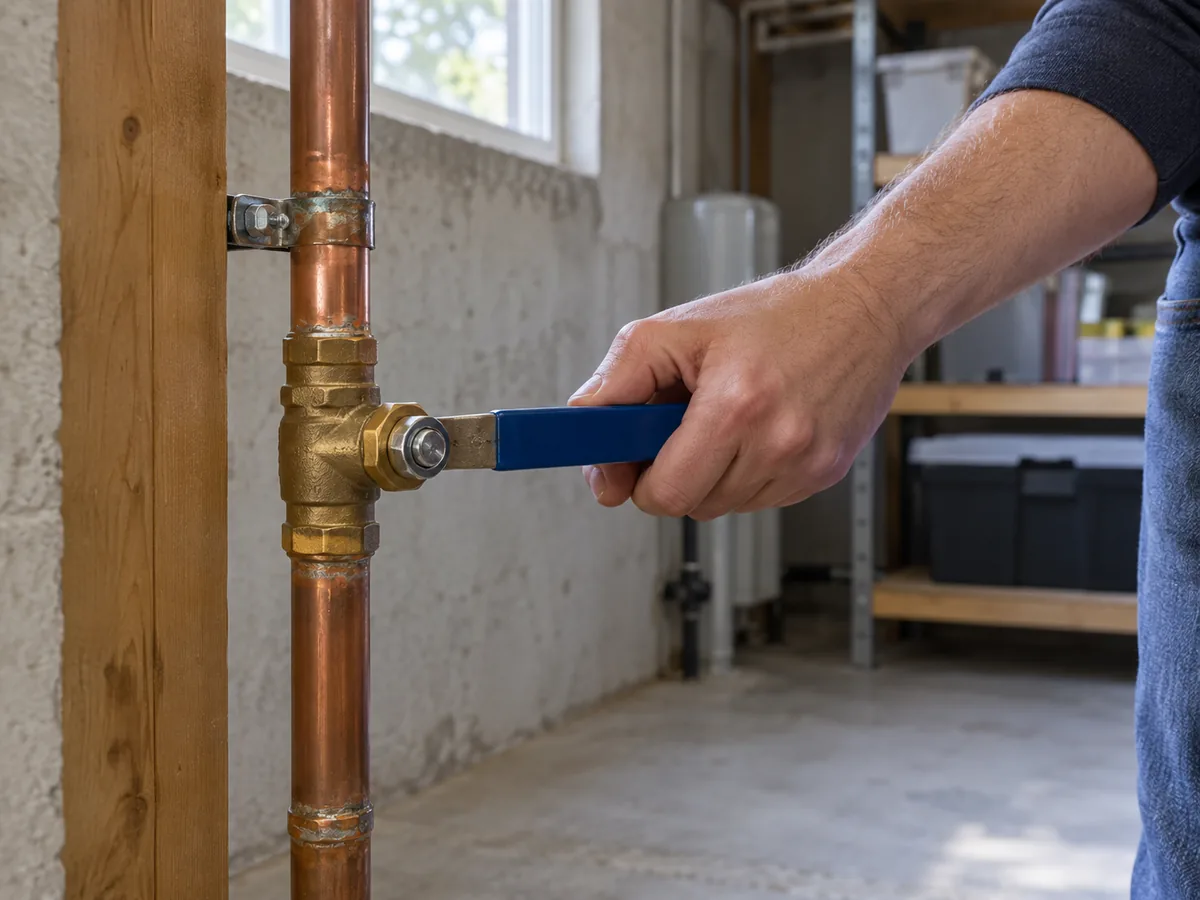
A familiar fixture shutoff can sometimes isolate water to a toilet or sink. A larger supply leak may require the property’s main shutoff. Operate only a valve you recognize and can reach without crossing water, touching electrical equipment, or entering an unsafe space.
Do not force a stuck or corroded valve. Turning an unfamiliar component can create a new problem, and utility-owned equipment may require the utility’s involvement. If you cannot safely stop the flow, explain that clearly when contacting a provider or the appropriate utility. Knowing the shutoff location in advance is much easier than searching during a leak.
Handle Wastewater Backups Differently
Water coming back through a toilet, tub, or floor drain may involve the drainage system rather than the pressurized supply. Running more water elsewhere can add to the backup. Stop using affected fixtures and appliances that discharge into that system, and keep children and pets away.
Avoid contact with sewage and do not add drain chemicals to standing wastewater. Repeated flushing is not a useful test when water is already rising. Tell the provider which fixtures are affected and whether water appears when another fixture runs; those observations can guide the initial assessment.
Reduce Damage Without Creating More Risk
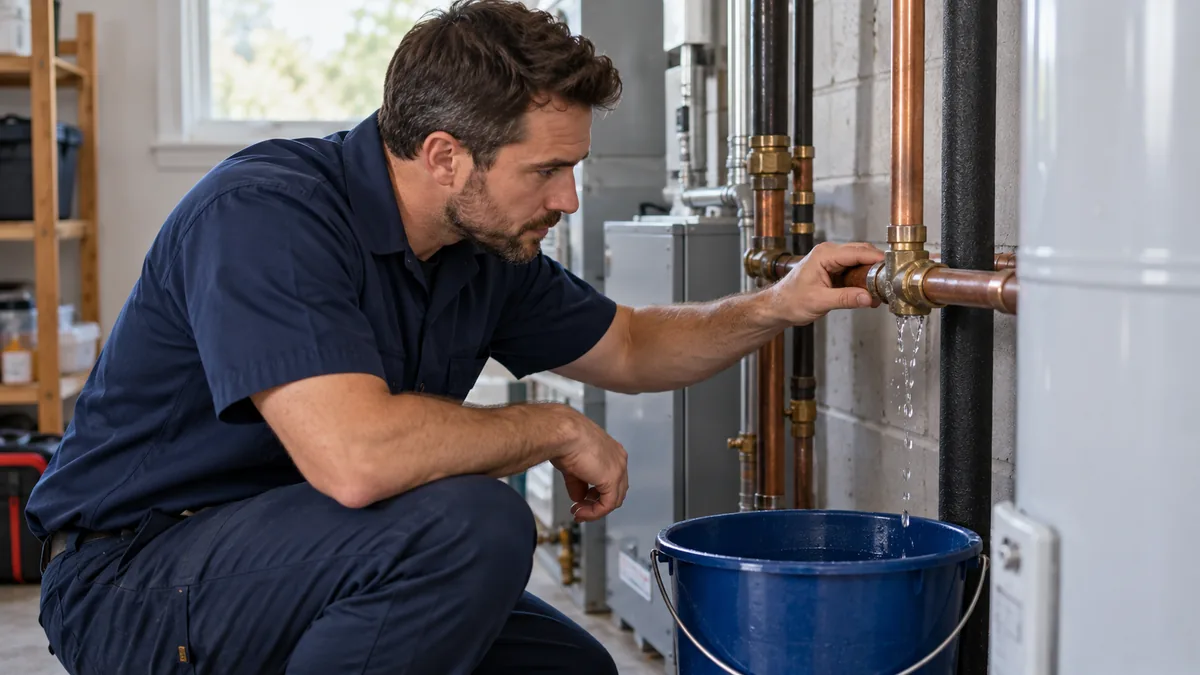
If the area is dry and safe to approach, a container under a small accessible drip may limit spreading water. Move nearby possessions only when you can do so safely. Do not climb onto unstable surfaces, stand beneath a damaged ceiling, or place yourself near electrical hazards to protect belongings.
Photographs taken from a safe position can help explain the location and extent of a problem. Note when it began and what changed after water use stopped or a valve was operated. Do not dismantle a pipe or appliance to obtain better photographs of a suspected fault.
Give Useful Information When Seeking Help
Describe whether water is still flowing, whether it appears clean or is wastewater, and where it is entering the room. Mention any shutoff you have used and whether electricity, gas, or unstable materials are involved. Give the property location and explain access limitations.
Ask the provider about current availability, assessment charges, and what they need you to avoid while waiting. Do not infer a guaranteed arrival time from the word emergency. If a connection is unavailable, you may need another provider or utility contact rather than assume help has been dispatched.
Understand Temporary Containment and Permanent Repair
Stopping visible water does not necessarily repair the defect. A damaged fitting, burst pipe, failed appliance, or recurring sewer restriction may require different work. Ask what the provider believes caused the problem and whether the proposed action is temporary stabilization or a lasting repair.
Before authorizing work, confirm the scope, price or estimate basis, additional-work approval, and what is excluded. Plumbing repair may not include drying, cleaning, or restoration of floors and walls. Keep a record of the diagnosis and completed work, especially if the same symptoms have occurred before.
Prepare for the Next Plumbing Problem
Once the immediate situation is safe, learn the location of the main and relevant fixture shutoffs. Keep access clear and ask a professional about damaged or difficult valves. Make a simple household plan so other occupants know which areas to avoid and how to report a leak.
Check accessible hoses and fittings periodically, and investigate repeated minor leaks rather than waiting for a larger failure. Maintain utility and emergency contact information where it can be found easily. Preparation cannot prevent every failure, but it can reduce confusion and unsafe improvisation when water begins escaping.
Frequently Asked Questions
Is every plumbing leak an emergency?
Urgency depends on water flow, contamination, location, and hazards. A small contained drip differs from uncontrolled flow or wastewater near occupied areas.
Should I turn off electricity myself?
Do not approach wet electrical equipment or cross standing water to operate controls. Leave a hazardous area and seek appropriate emergency assistance.
Does shutting off the main stop a sewer backup?
A sewer backup can involve shared drainage or an external source. Stop affected water use and seek assessment rather than assuming a supply shutoff resolves it.
Does this website dispatch emergency crews?
No. DaltonPlumber.com helps visitors seek independent provider connections. Availability and response times are not guaranteed.
Find Plumbing Help in Dalton, GA
For a safe situation requiring plumbing assessment, describe the active symptoms when seeking an independent provider connection. For immediate danger, contact emergency services instead of waiting for a referral. Availability is not guaranteed.