Clogs keep returning
A toilet that repeatedly blocks despite normal use may need inspection. If the tub or sink also backs up, describe the wider drainage pattern.
TOILET TROUBLESHOOTING · DALTON, GEORGIA
A toilet that runs, flushes poorly, or leaks around its base can waste water and disrupt a bathroom. Understanding the symptom helps you explain the problem.
DaltonPlumber.com helps Dalton and Whitfield County visitors seek connections with independent plumbing providers, subject to availability. We do not repair toilets or guarantee that a particular part or service will be available.
Our referral phone line is not yet configured. View current contact options.
RECOGNIZE THE SYMPTOMS
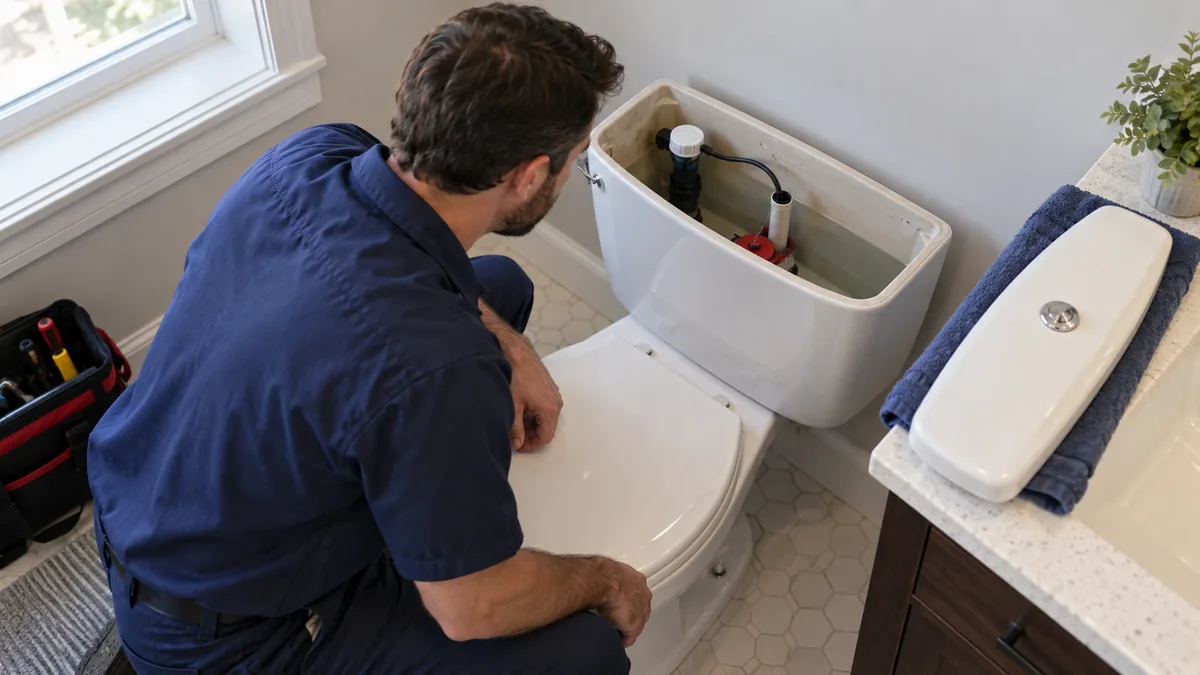
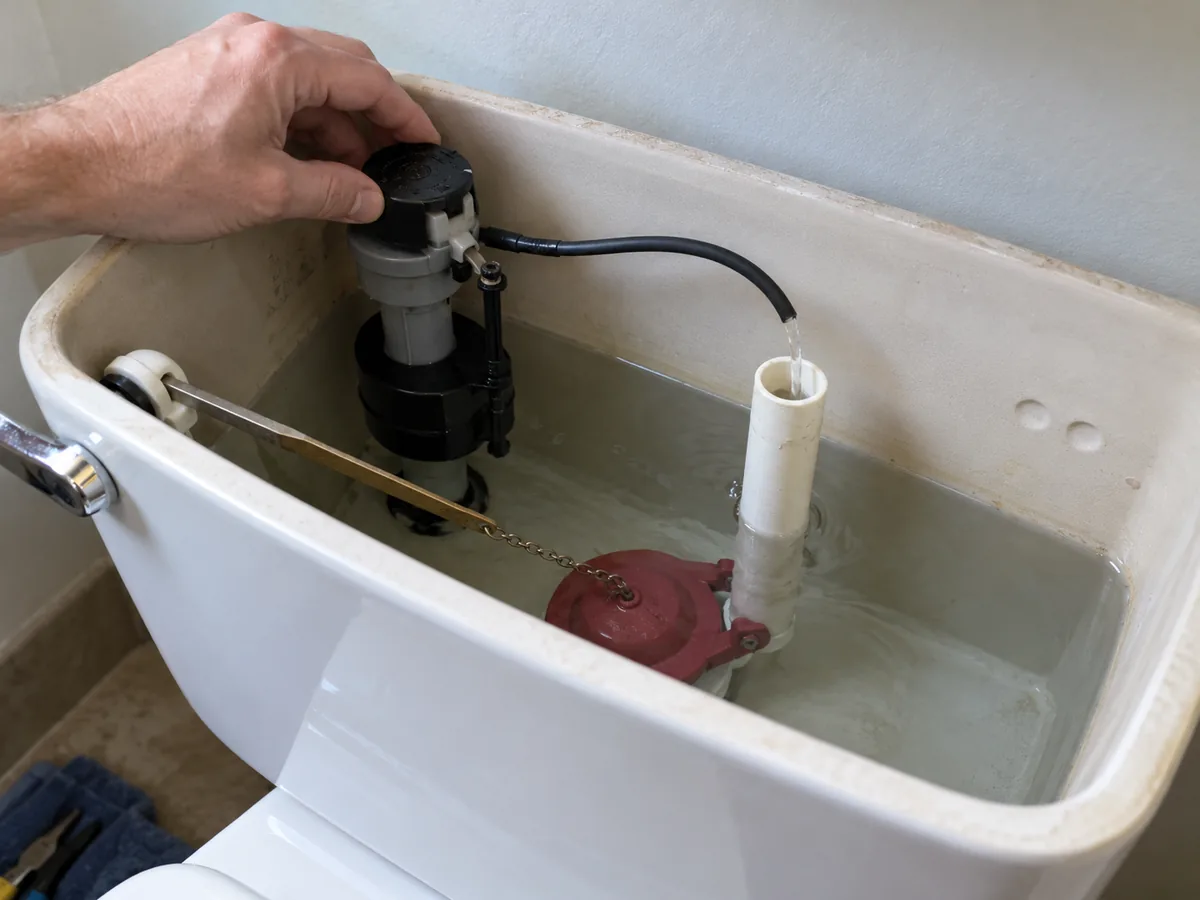
Water entering the bowl between flushes may involve the flapper, chain, fill valve, or overflow level. A continuing refill sound is a useful detail to mention to a provider.
Too much paper or a foreign object may restrict the toilet trap. Repeated clogs or a backup involving other fixtures can point to a problem farther down the drainage system.
A weak flush may relate to tank water level, a restricted passage, or a developing blockage. Note whether it began suddenly and whether other fixtures drain normally.
A wet floor can come from a tank, supply connection, condensation, or the base seal. Finding the actual source matters before replacing a seal or tightening anything.
A worn flapper can let tank water escape, while a fill valve may fail to stop or refill properly. Compatible parts depend on the toilet’s design.
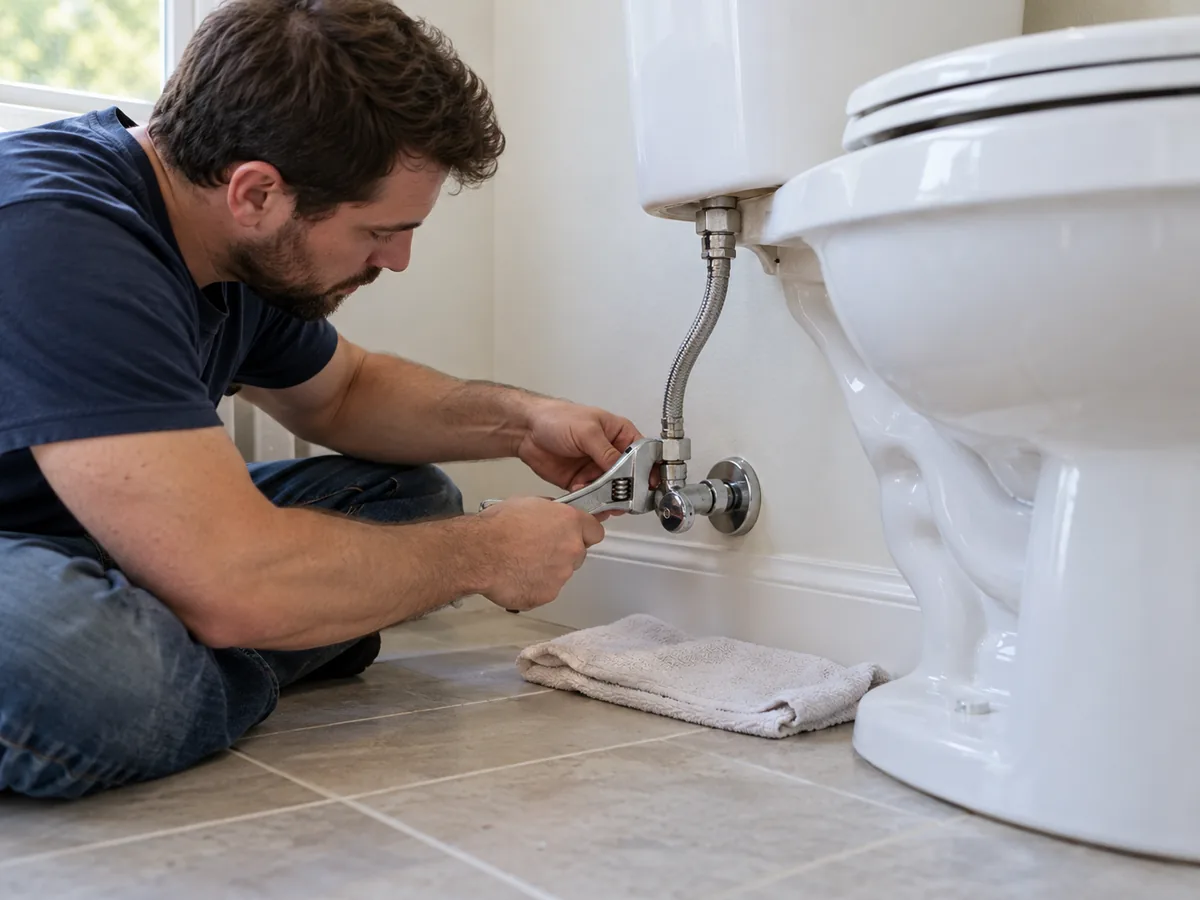
Moisture near a braided hose, valve, or connection needs attention. A stuck shutoff or corroded fitting should not be forced, especially during an active leak.
Some simple observations are safe, but recurring drainage or leakage problems deserve more than repeated temporary fixes.
A toilet that repeatedly blocks despite normal use may need inspection. If the tub or sink also backs up, describe the wider drainage pattern.
A leak at the base or supply can damage flooring. Stop using a leaking toilet and seek assessment of the source, support, and connections.
Movement, cracked porcelain, or incompatible replacement parts can complicate repair. Do not overtighten bolts or try to repair a cracked bowl yourself.
UNDERSTAND THE OPTIONS
An assessment can distinguish tank-component faults from a drainage, seal, supply-line, or fixture problem.
A provider may check the handle linkage, flapper seating, fill valve, and overflow arrangement, then select compatible replacement components if needed.
Appropriate toilet tools may address a localized obstruction. Recurring or multiple-fixture backups may require investigation farther along the drain.
Leak tracing can include the tank connections, supply valve, base, and toilet stability. A cracked fixture or damaged supporting area may change the repair plan.
Discuss parts, access, and any drain investigation with the independent provider. Not every symptom can be fixed by replacing a flapper.
DaltonPlumber.com is an independent referral website, not a plumbing contractor. Providers are responsible for their own services and terms.
Describe running sounds, flushing behavior, where you see water, and whether any other drains are affected.
Ask about a connection with an independent plumbing provider serving your location, where available. A connection or appointment is not guaranteed.
Confirm the assessment, service options, pricing, and scheduling with the provider before authorizing any work.
Keep troubleshooting simple and stop if a fixture is leaking or overflowing.
Stop using a toilet that leaks onto the floor or overflows. Avoid contact with wastewater and keep children and pets away. Do not mix drain chemicals or use repeated chemical treatments to address a toilet blockage; tell a provider if chemicals have already been added.
A flapper that does not seal, a snagged chain, or a fill-valve or overflow-level issue can allow continued water flow. A provider can check which component is responsible and which parts fit.
Repeated flushing can overflow the bowl. Stop if the water is high or rising and avoid using the toilet until the obstruction is addressed. Multiple affected fixtures may indicate a shared drain problem.
Potential sources include a supply connection, tank leak, condensation, or the base seal. The location of the puddle alone does not identify the failed part. Stop use and have the source assessed.
Not necessarily. Tank components, a restricted passage, or drainage issues may be involved. A provider can assess repair options and explain when replacement makes sense.
The price depends on the fault, compatible parts, access, and any drainage or flooring work involved. Ask the provider about assessment fees and the proposed scope before authorizing repair.
Repeated backups together with slow tubs, sinks, or other toilets may point downstream. It needs assessment rather than an assumption; stop adding water if several fixtures are backing up.
Seek a connection with an independent plumbing provider serving Dalton, subject to availability. Discuss your situation, service options, and pricing directly with the provider.
Phone line not yet configured.
See current contact options →
Images are AI-generated illustrations of plumbing scenarios, not photographs of actual local contractors or customer jobs.